Chi uscì con Sakae Ōsugi?
Noe Itō ha datato Sakae Ōsugi dal ? al ?. La differenza di età era di 10 anni, 0 mesi e 4 giorni.
Sakae Ōsugi
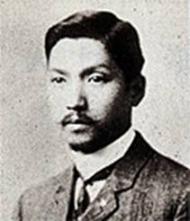
Ōsugi Sakae (Japanese: 大杉 栄; 17 January 1885 – 16 September 1923) was a Japanese anarchist, writer, and social critic of the Taishō period. His thought centered on individualism, direct action, and the "expansion of the ego" as philosophical underpinnings for social and personal revolution. His advocacy of free love and his controversial personal life, which included simultaneous relationships with three women, led to a violent attack against him and his temporary ostracism from the socialist movement.
Born into a military family, Ōsugi was expelled from military school for insubordination and turned to language studies and radical politics in Tokyo. After a series of prison terms between 1906 and 1910, which he considered his "real education," he emerged as a leading voice in the Japanese anarchist movement. Through his journals, such as Kindai shisō (Modern Thought) and Rōdō undō (The Labor Movement), he introduced the works of European thinkers like Peter Kropotkin, Georges Sorel, and Henri Bergson to Japan, synthesizing their ideas into his own philosophy. He became a key figure in the Japanese labor movement, advocating for syndicalism and workers' autonomy while strongly criticizing both state authority and the emerging Bolshevism.
In the chaotic aftermath of the 1923 Great Kantō earthquake, Ōsugi, his partner and fellow anarchist Itō Noe, and his six-year-old nephew were arrested by a squad of military police led by Captain Amakasu Masahiko. They were beaten and strangled, their bodies disposed of in a well. Their murders, known as the Amakasu Incident, became a symbol of state violence against radicals during the period.
Per saperne di più...Noe Itō
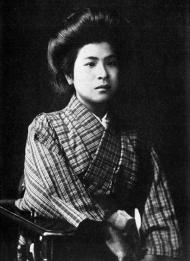
Noe Itō (伊藤 野枝?, Itō Noe; Fukuoka, 21 gennaio 1895 – Tokyo, 16 settembre 1923) è stata un'anarchica, scrittrice e femminista giapponese.
Per saperne di più...