Chi uscì con Grace Elliott?
George IV of the United Kingdom ha datato Grace Elliott dal ? al ?.
George Cholmondeley, 1st Marquess of Cholmondeley ha datato Grace Elliott dal ? al ?.
Arthur Annesley, 1st Earl of Mountnorris ha datato Grace Elliott dal ? al ?.
Louis Philippe II, Duke of Orléans ha datato Grace Elliott dal ? al ?.
Grace Elliott

Grace Dalrymple, Lady Elliott (* um 1754 in Edinburgh; † 16. Mai 1823 in Ville-d’Avray) war eine schottische Kurtisane, die in Paris Augenzeugin der Französischen Revolution wurde. Sie war die Mätresse des späteren Königs Georg IV. und des Herzogs von Orléans.
Per saperne di più...George IV of the United Kingdom
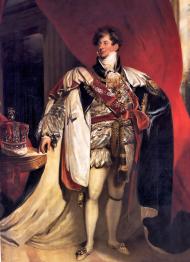
George IV (George Augustus Frederick; 12 August 1762 – 26 June 1830) was King of the United Kingdom of Great Britain and Ireland and King of Hanover from 29 January 1820 until his death in 1830. At the time of his accession to the throne, he was acting as prince regent for his father, King George III, having done so since 5 February 1811 during his father's final mental illness.
George IV was the eldest child of King George III and Queen Charlotte. He led an extravagant lifestyle that contributed to the fashions of the Regency era. He was a patron of new forms of leisure, style and taste. He commissioned John Nash to build the Royal Pavilion in Brighton and remodel Buckingham Palace, and commissioned Jeffry Wyatville to rebuild Windsor Castle. George's charm and culture earned him the title "the first gentleman of England", but his dissolute way of life and poor relationships with his parents and his wife, Caroline of Brunswick, earned him the contempt of the people and dimmed the prestige of the monarchy. He excluded Caroline from his coronation and asked the government to introduce the unpopular Pains and Penalties Bill in an unsuccessful attempt to divorce her.
George's rule was tarnished by scandal and financial extravagance. His ministers found his behaviour selfish, unreliable and irresponsible, and he was strongly influenced by favourites. During most of George's regency and reign, Lord Liverpool controlled the government as prime minister of the United Kingdom. Liverpool's government presided over Britain's ultimate victory over Napoleon and negotiated a peace settlement with the French. After Liverpool's retirement, George was forced to accept Catholic emancipation despite opposing it. His only legitimate child, Princess Charlotte, predeceased him in 1817, as did his childless younger brother Prince Frederick in 1827, so he was succeeded by another younger brother, William IV.
Per saperne di più...Grace Elliott
George Cholmondeley, 1st Marquess of Cholmondeley
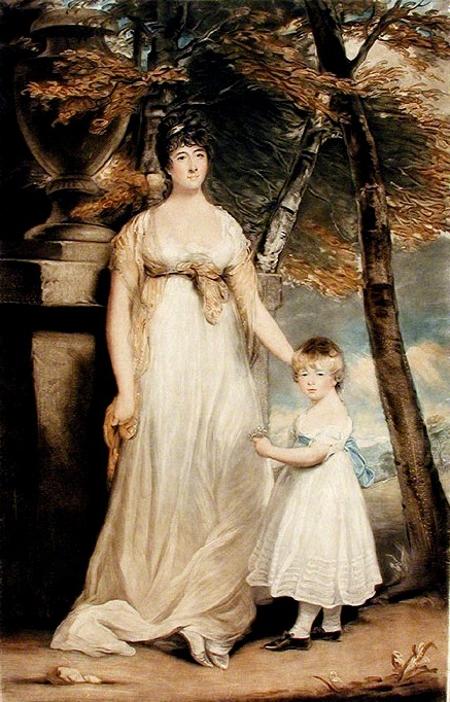
George James Cholmondeley, I marchese di Cholmondeley (Hardingstone, 11 maggio 1749 – Londra, 10 aprile 1827), è stato un politico e nobile britannico.
Per saperne di più...Grace Elliott
Arthur Annesley, 1st Earl of Mountnorris
Arthur Annesley, 1st Earl of Mountnorris FRS (7 August 1744 – 4 July 1816) was an Irish peer.
He was the son of Richard Annesley, 6th Earl of Anglesey, and Juliana Donovan, Countess of Anglesey, who belonged to the junior sept of the O'Donovans of Clan Loughlin, the Donovans of Ballymore in County Wexford. She was initially rumoured to be of lower birth, the ancient pedigrees of some Irish families not being widely known in the English-speaking world at that time, and hers deriving from a remote region of Ireland, the Barony of Carbery. Countess Juliana was the great-great-great-granddaughter of Donel Oge na Cartan O'Donovan, the 1st Lord of Clan Loughlin to hold his territories from the Crown, from 1616 (see surrender and regrant).
He succeeded to the title of 6th Baron Altham, of Altham, in County Cork, and to the title of 8th Viscount Valentia upon his father's death on 14 February 1761.
On 22 April 1771, the House of Lords decided that his claim to his father's English titles was not valid, and that therefore these titles had become extinct on his father's death in 1761. He was created 1st Earl of Mountnorris [Ireland] on 3 December 1793.
Per saperne di più...Grace Elliott
Louis Philippe II, Duke of Orléans
Luigi Filippo II d'Orléans, noto durante la Rivoluzione con il nome di Philippe Égalité (Saint-Cloud, 13 aprile 1747 – Parigi, 6 novembre 1793), era l'unico figlio maschio del duca d'Orléans Luigi Filippo I e della moglie Luisa Enrichetta di Borbone. Anti-realista e liberale, appoggiò attivamente la Rivoluzione francese, finendo per votare a favore della condanna a morte del cugino Luigi XVI, ma finì anch'egli ghigliottinato durante il Terrore.
Padre del futuro re dei Francesi Luigi Filippo, con lui il termine orleanista ha incominciato a essere utilizzato per definire un atteggiamento sociale e politico legato a un'idea di monarchia costituzionale. Il suo voto non fu decisivo per la condanna a morte di Luigi XVI, anche se espresso al momento di una situazione di parità (Luigi Filippo fu l'ultimo dei 24 votanti in un giorno, facendo pendere per la massima pena), perché nelle votazioni successive "la condanna a morte ottenne una maggioranza sufficiente il 17 gennaio 1793, con 387 voti favorevoli e 334 contrari. Raggiunto l'accordo sulla pena, restava da deciderne l'eventuale rinvio, bocciato il 19 gennaio con 383 voti contro 310."
Per saperne di più...