Chi uscì con Emilia Pardo Bazán?

  • Benito Pérez Galdós ha datato Emilia Pardo Bazán dal al ?. La differenza di età era di 8 anni, 4 mesi e 6 giorni.

Emilia Pardo Bazán
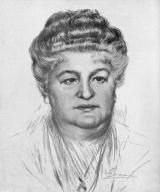
Emilia Pardo Bazán

Contessa Emilia Pardo-Bazán y de la Rúa-Figueroa (La Coruña, 16 settembre 1851 – Madrid, 12 maggio 1921) è stata una scrittrice, giornalista e saggista spagnola, ricordata per aver introdotto il Naturalismo in Spagna.

Per il suo sostegno ai diritti delle donne è ritenuta una precorritrice del femminismo. Rivendicò l'istruzione delle donne come un diritto fondamentale, che difese per una parte importante della sua attività pubblica. Tra le sue opere letterarie, una delle più famose è il romanzo Signorotti di Galizia (1886-1887).

Per saperne di più...
 

Benito Pérez Galdós

Benito Pérez Galdós

Benito María de los Dolores Pérez Galdós (Spanish pronunciation: [beˈnito ˈpeɾeθ ɣalˈdos]; 10 May 1843 – 4 January 1920) was a Spanish realist novelist and politician. He was a leading literary figure in 19th-century Spain, and some scholars consider him second only to Miguel de Cervantes in stature as a Spanish novelist.

Pérez Galdós was a prolific writer, publishing 31 major novels, 46 historical novels in five series, 23 plays, and the equivalent of 20 volumes of shorter fiction, journalism and other writings. He remains popular in Spain, and is considered equal to Charles Dickens, Honoré de Balzac and Leo Tolstoy. He is less well known in Anglophone countries, but some of his works have now been translated into English. His play Realidad (1892) is important in the history of realism in the Spanish theatre. The Pérez Galdós museum in Las Palmas, Gran Canaria features a portrait of the writer by Joaquín Sorolla.

Pérez Galdós was nominated for the Nobel Prize for Literature in 1912, but his opposition to religious authorities led him to be boycotted by conservative sectors of Spanish society, and traditionalist Catholics, who did not recognize his literary merit.

Galdós was interested in politics, although he did not consider himself a politician. His political beginnings were liberal, and he later embraced republicanism and then socialism, under Pablo Iglesias Posse. Early on he joined the Sagasta Progressive Party and in 1886 became a deputy for Guayama, Puerto Rico. At the beginning of the 20th century he joined the Republican Party and was elected deputy to the Madrid cortes for the Republican–Socialist Conjunction in the legislatures of 1907 and 1910. In 1914 he was elected deputy for Las Palmas.

Per saperne di più...