Chi uscì con Cleopatra VII?
Julius Caesar ha datato Cleopatra VII dal ? al ?. La differenza di età era di 30 anni, 6 mesi e 10 giorni.
Gnaeus Pompeius Magnus ha datato Cleopatra VII dal ? al ?.
Cleopatra VII
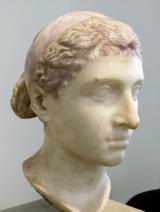
Cleopatra VII Thea Philopator (Koine Greek: Κλεοπάτρα Θεά Φιλοπάτωρ, lit. 'Cleopatra father-loving goddess'; 70/69 BC – 10 or 12 August 30 BC) was Queen of the Ptolemaic Kingdom of Egypt from 51 to 30 BC, and the last active Hellenistic pharaoh. A member of the Ptolemaic dynasty, she was a descendant of its founder Ptolemy I Soter, a Macedonian Greek general and companion of Alexander the Great. Her first language was Koine Greek, and she is the only Ptolemaic ruler known to have learned the Egyptian language, among several others. After her death, Egypt became a province of the Roman Empire, marking the end of the Hellenistic period in the Mediterranean, which had begun during the reign of Alexander (336–323 BC).
Born in Alexandria, Cleopatra was the daughter of Ptolemy XII Auletes, who named her his heir before his death in 51 BC. Cleopatra began her reign alongside her brother Ptolemy XIII, but a falling-out between them led to a civil war. Roman statesman Pompey fled to Egypt after losing the 48 BC Battle of Pharsalus against his rival Julius Caesar, the Roman dictator, in Caesar's civil war. Pompey had been a political ally of Ptolemy XII, but Ptolemy XIII had him ambushed and killed before Caesar arrived and occupied Alexandria. Caesar then attempted to reconcile the rival Ptolemaic siblings, but Ptolemy XIII's forces besieged Cleopatra and Caesar at the palace. Shortly after the siege was lifted by reinforcements, Ptolemy XIII died in the Battle of the Nile. Caesar declared Cleopatra and her brother Ptolemy XIV joint rulers, and maintained a private affair with Cleopatra which produced a son, Caesarion. Cleopatra traveled to Rome as a client queen in 46 and 44 BC, where she stayed at Caesar's villa. After Caesar's assassination, followed shortly afterwards by the sudden death of Ptolemy XIV (possibly murdered on Cleopatra's order), she named Caesarion co-ruler as Ptolemy XV.
In the Liberators' civil war of 43–42 BC, Cleopatra sided with the Roman Second Triumvirate formed by Caesar's heir Octavian, Mark Antony, and Marcus Aemilius Lepidus. After their meeting at Tarsos in 41 BC, the queen had an affair with Antony, which produced three children. Antony became increasingly reliant on Cleopatra for both funding and military aid during his invasions of the Parthian Empire and the Kingdom of Armenia. The Donations of Alexandria declared their children rulers over various territories under Antony's authority. Octavian portrayed this event as an act of treason, forced Antony's allies in the Roman Senate to flee Rome in 32 BC, and declared war on Cleopatra. After defeating Antony and Cleopatra's naval fleet at the 31 BC Battle of Actium, Octavian's forces invaded Egypt in 30 BC and defeated Antony, who committed suicide. After his death, Cleopatra reportedly killed herself, probably by poisoning, to avoid being publicly displayed by Octavian in a Roman triumphal procession.
Cleopatra's legacy survives in ancient and modern works of art. Roman historiography and Latin poetry produced a generally critical view of the queen that pervaded later Medieval and Renaissance literature. In the visual arts, her ancient depictions include Roman busts, paintings, sculptures, cameo carvings and glass, Ptolemaic and Roman coinage, and reliefs. In Renaissance and Baroque art, she was the subject of many works including operas, paintings, poetry, sculptures, and theatrical dramas. She has become a pop culture icon of Egyptomania since the Victorian era, and in modern times has appeared in the applied and fine arts, burlesque satire, Hollywood films, and brand images for commercial products.
Per saperne di più...Julius Caesar

Gaio Giulio Cesare (in latino Gaius Iulius Caesar, pronuncia restaurata o classica; AFI: [ˈɡäː.i.ʊs ˈjuː.li.ʊs ˈkɐ̯ɛ̯.sär]; nelle epigrafi C·IVLIVS·C·F·CAESAR e DIVVS IVLIVS; in greco antico Γάϊος Ἰούλιος Καῖσαρ?, Gáïos Iúlios Kaîsar; Roma, 13 luglio 101 a.C. o 12 luglio 100 a.C. – Roma, 15 marzo 44 a.C.) è stato un politico, militare, scrittore e oratore romano, considerato una delle figure più importanti e influenti della storia nonché uno dei migliori generali di ogni tempo.
Ebbe un ruolo fondamentale nella transizione del sistema di governo dalla forma repubblicana a quella imperiale. Fu dictator di Roma alla fine del 49 a.C., nel 47 a.C., nel 46 a.C. con carica decennale e dal 44 a.C. come perpetuo, e per questo ritenuto da Gaio Svetonio Tranquillo il primo dei dodici Cesari, in seguito sinonimo di imperatore romano. Con la conquista della Gallia estese il dominio della Res Publica Romana fino al Mare del Nord e al Reno e portò gli eserciti romani a invadere per la prima volta la Britannia e la Germania, nonché a combattere in Spagna, Grecia, Egitto, Ponto (attuale Anatolia nord-orientale) e Africa.
Il primo triumvirato, l'accordo privato per la spartizione del potere con Gneo Pompeo Magno e Marco Licinio Crasso Dive, segnò l'inizio della sua ascesa. In base all'accordo, Cesare sarebbe stato eletto console con l'appoggio politico di Pompeo e finanziario di Crasso; in cambio, una volta console, avrebbe ratificato i provvedimenti presi in Oriente da Pompeo, avrebbe concesso le terre ai suoi veterani, e avrebbe avviato delle riforme a favore del ceto equestre per Crasso. Con il rinnovo del triumvirato, a Lucca nel 56 a.C., fu riconfermato proconsole in Gallia Cisalpina (e Illirico settentrionale), Gallia Narbonense e Gallia Comata. Dopo la morte di Crasso, caduto contro i Parti (Carre, 53 a.C.), Cesare si scontrò con Pompeo e la fazione degli optimates per il controllo dello Stato. Nel 49 a.C., di ritorno dalla Gallia, guidò le sue legioni attraverso il Rubicone (sulla cui linea, nell'81 a.C., Lucio Cornelio Silla Fortunato aveva spostato il confine del pomerio della città) e scatenò una guerra civile (pronunciando le celebri parole «Alea iacta est»). Sconfisse Pompeo a Farsalo (48 a.C.) e successivamente gli altri optimates, tra cui Marco Porcio Catone poi detto Uticense, divenendo padrone indiscusso di Roma.
Con l'assunzione della dittatura a vita diede inizio a un processo di radicale riforma della società e della politica romana, assicurandosi potere assoluto sulla Repubblica. Il suo operato provocò la reazione dei conservatori, finché un gruppo di senatori, capeggiati da Quinto Servilio Cepione Bruto, Gaio Cassio Longino e Decimo Giunio Bruto Albino, cospirò contro di lui, uccidendolo alle idi di marzo del 44 a.C. (15 marzo 44). Nel 42 a.C., appena due anni dopo il suo assassinio, il Senato lo deificò ufficialmente, elevandolo a divinità. L'eredità riformatrice e storica di Cesare fu quindi raccolta da Gaio Ottavio Turino, suo pronipote e figlio adottivo con il nome di Gaio Giulio Cesare Ottaviano.
Le campagne militari e le azioni politiche di Cesare sono da lui stesso dettagliatamente raccontate in terza persona nei Commentarii de bello Gallico e nei Commentarii de bello civili. Numerose notizie sulla sua vita sono presenti negli scritti di Appiano di Alessandria, il già citato Svetonio, Lucio Mestrio Plutarco, Lucio Cassio Dione Cocceiano e Strabone. Altre informazioni possono essere rintracciate nelle opere di autori suoi contemporanei, come nelle lettere e nelle orazioni del suo rivale politico Marco Tullio Cicerone, nelle poesie di Gaio Valerio Catullo e negli scritti storici di Gaio Sallustio Crispo.
Per saperne di più...Cleopatra VII
Gnaeus Pompeius Magnus

Gnaeus Pompeius Magnus (ca. 75 BC – 12 April 45 BC) was a Roman politician and general from the late Republic (1st century BC).
Per saperne di più...